




The Role of Plasma Surface Treatment in Enhancing Adhesion
Modern manufacturing faces a persistent challenge that threatens product quality and performance: poor adhesion between surfaces and coatings. When adhesives fail, coatings peel, or markings fade prematurely, the root cause often lies in inadequate surface preparation.
One transformative solution for this problem is plasma surface treatment. Here, we’ll outline the role of plasma surface treatment in enhancing adhesion, its many benefits, applications, and more.
Understanding Adhesion Challenges in Manufacturing
Manufacturers can struggle with bonding, molding, or coating materials due to the low surface energy of substrates like polyethylene (PE), polyvinyl chloride (PVC), polypropylene (PP), and fluoropolymers such as PTFE. These materials are highly hydrophobic, like a waxed surface where water beads instead of spreading. The weak intermolecular forces on their surfaces make it difficult for adhesives, coatings, or inks to adhere together strongly.
Untreated surfaces pose additional challenges for processes like labeling, printing, or coating. Poor wettability can cause inconsistent coverage, reduce durability, and even product failures, affecting quality and traceability.
Plasma Treatment Versus Traditional Chemical Etching
Manufacturers address these adhesion challenges typically either with chemical etching or plasma surface treatment. Chemical etching uses aggressive solvents or abrasives to alter surface topography and chemistry, making it effective for materials like PTFE. However, it requires secondary processing, introduces safety and environmental concerns, and may cause inconsistent outcomes and unwanted color changes in treated surfaces.
Plasma treatment offers a more controlled alternative, modifying only the outermost molecular layers without impacting the bulk material. It eliminates the need for hazardous chemicals, reduces handling complexity, and allows seamless integration into existing production workflows through in-line processing.
The Science Behind Plasma Treatment Technology
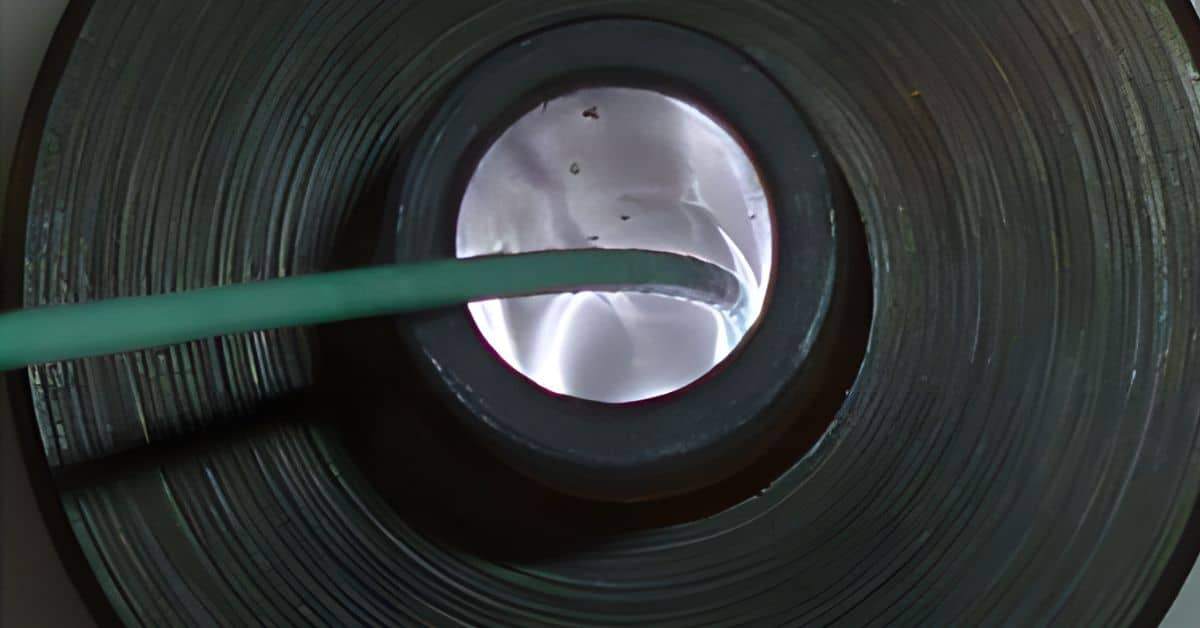
Plasma, the fourth state of matter, is an ionized gas made up of charged particles like ions and electrons. When these particles accelerate in an electrical field, they gain enough energy to alter surface characteristics through controlled bombardment. In plasma treatment, a wire or cable passes through a plasma field where charged particles and UV photons break polymer bonds, create cross-linking, and introduce reactive species to enhance surface energy. This process also creates microscopic surface texturing, increasing the contact area for better adhesion.
Plasma treatment systems operate with milliampere-level currents, modifying the surface properties without damaging the material beneath. Operators can precisely control the treatment intensity by adjusting the exposure time within the plasma chamber.
Comprehensive Benefits of Plasma Treatment
Plasma surface treatment delivers measurable improvements across critical performance areas that directly impact manufacturing quality and efficiency. Better surface wettability, improved bondability, and superior durability are just a few advantages of plasma surface treatment.
Better Surface Wettability
Plasma treatment significantly increases surface energy, which enhances the material’s wettability. This allows adhesives, coatings, and inks to spread evenly across the treated surface. The improved contact eliminates air pockets at the interface and maximizes the bonding area, ensuring better adhesion.
Improved Bondability
Plasma treatment populates the surface with reactive free radicals, creating chemically active sites. These reactive species form stronger intermolecular bonds with adhesives and coatings, leading to more durable bonds that can withstand environmental stress and mechanical loads.
Superior Durability
Plasma-treated components are much more durable than those without. The stronger bonding from the surface preparation guarantees that the assemblies meet rigorous durability standards. Plasma-treated bonds have proven to maintain integrity under temperature cycling, vibration, and chemical exposure.
Process Consistency
Plasma treatment verifies consistent results by eliminating the variability that storage conditions or surface contamination cause. It provides uniform surface properties, regardless of a material’s handling history or prior environmental exposure, for a reliable and repeatable process.
Diverse Industrial Applications
The role of plasma surface treatment in enhancing adhesion makes it applicable to many diverse industries. From medical devices to aerospace manufacturing, plasma surface treatment is useful in many corners of the world.
Medical Applications
The medical field utilizes plasma treatment for treating angioplasty balloons, catheter surfaces, hypodermic needle components, and insulin pump assemblies. These applications demand biocompatibility and high reliability, which plasma treatment effectively delivers.
Aerospace Applications
In the aerospace industry, aviation manufacturers employ plasma treatment for cable connector preparation, wire harness component bonding, and composite surface treatment. The stringent performance requirements in aerospace environments benefit from plasma treatment’s superior adhesion characteristics.
Wire and Cable Manufacturing
Wire and cable manufacturers rely on plasma treatment for stronger marking adhesion, greater bonding of potting compounds, and superior cable jacket preparation. The ability to perform in-line processing eliminates secondary operations and confirms optimal surface preparation just before downstream processing.
Advanced Plasma Treatment Systems
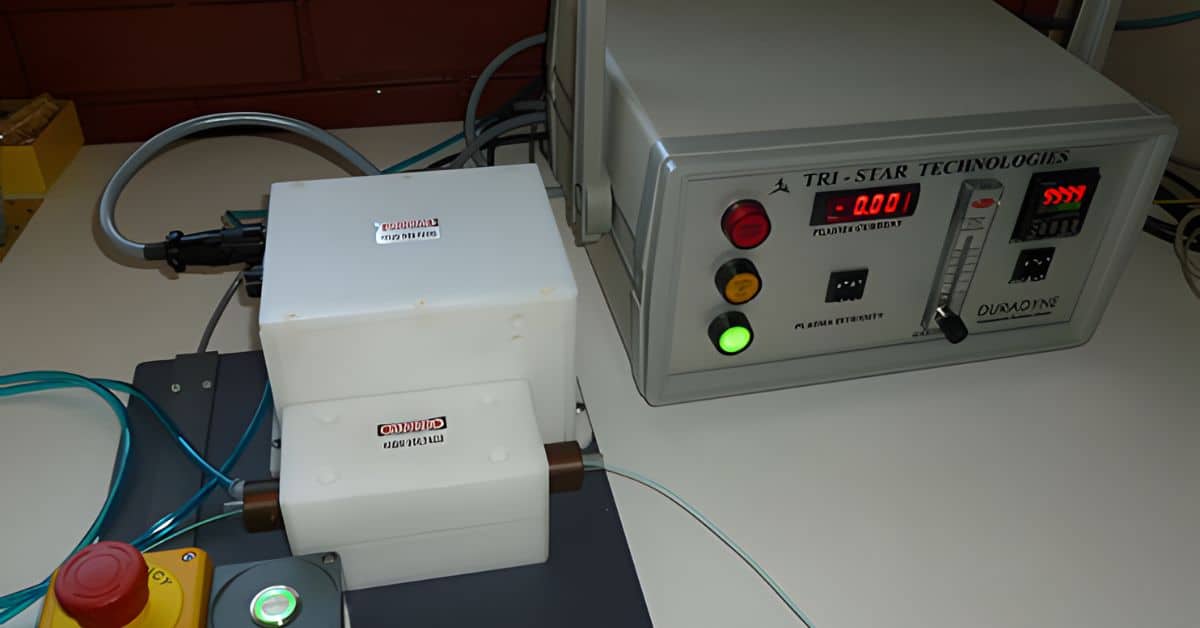
Tri-Star Technologies provides high-quality plasma surface treatment systems for various applications and uses. The PT-1000 and PT-2000P Duradyne are both reliable plasma surface system options for manufacturers of all kinds.
PT-1000
The PT-1000 is a cutting-edge atmospheric pressure plasma system for wire and cable treatments. It operates at low current levels, generating plasma around moving conductors through specialized electrodes. Supporting cable diameters up to two inches, its split electrode design allows for continuous processing of endless extrusions.
The PT-1000 effectively treats both conductive and non-conductive materials in ambient environments, with the option to use special gas mixtures for greater performance. Integrated programmable logic controllers ensure precise process control, making them ideal for demanding manufacturing setups.
PT-2000P Duradyne
The PT-2000P Duradyne offers portable plasma treatment capabilities for research, development, and pilot production. This versatile system can treat surfaces ranging from 50-micron tubing internal diameters to large flat surfaces. Compact and user-friendly, it is perfect for laboratory environments while also supporting scalability for production use.
The PT-2000P utilizes standard gases such as argon and helium, with distinct gas mixtures available for specific materials. Despite its minimal 50-watt power consumption, it delivers treatment performance comparable to larger vacuum-based systems.

Key Factors for Successful Plasma Treatment
Implementing plasma treatment effectively requires careful consideration of material properties, processing parameters, and application needs. Treatment duration must strike a balance between effective surface modification and avoiding weak boundary layers that could compromise adhesion performance.
Material Selection and Treatment Parameters
The type of material greatly influences the plasma treatment process. For example, fluoropolymers like PTFE often require special gas mixtures or longer treatment times to achieve optimal results. In contrast, polyolefins typically respond well to standard air plasma treatment with shorter exposure times.
Processing Speed and Uniformity
Processing speed plays a crucial role in treatment uniformity. Slower speeds allow for more aggressive surface modification but can reduce throughput. To maintain both speed and effectiveness, extended plasma chambers enable higher processing speed without compromising the quality of the treatment.
Timing of Plasma Treatment
The effects of plasma treatment can diminish over time due to surface energy relaxation and contamination. As a result, users should perform plasma treatment as close as possible to bonding or coating operations. The ability to integrate plasma treatment in-line immediately before processing outweighs its shorter active period.
Maximize Surface Treatment Success With Tri-Star Technologies
Plasma surface treatment is a proven technology for enhancing adhesion across various manufacturing applications. With precise control, environmental compatibility, and in-line processing capabilities, it provides an efficient alternative to traditional chemical methods. Success relies on understanding material properties, process parameters, and application needs.
For manufacturers looking to boost adhesion performance, reduce environmental impact, and simplify processes, plasma treatment offers measurable improvements in product quality and efficiency. Contact Tri-Star Technologies today to learn how our expertise and advanced solutions can help optimize your manufacturing processes.